The Executive Summary
In Part 1, we examined why chasing speculative demand burns out municipal staff. In Part 2, we showed how auditing publicly controlled sites builds a high-value Municipal Asset Library. Now comes the critical pivot: Execution. An audited parcel creates no direct economic activity until readiness is converted into an executed transaction. This report provides the execution playbook: selecting the deal structure, running competitive, targeted solicitations, and sequencing regulatory hurdles to close.
A common failure in public real estate transactions is issuing a solicitation that simply attaches an Assessor Parcel Number (APN) and zoning excerpt. Private capital prices uncertainty as risk. When a city asks the market to guess at utility capacity or off-site obligations, reputable development teams walk away.
To turn vetted publicly controlled sites into closed deals, cities must shift from passive listing to intentional execution.
1. Productize the Site (The Investor Prospectus)
Before engaging brokers or developers, package each publicly controlled site into an Investor Prospectus:
● Utility Headroom: Confirm electric power (MW), water flow rates, and sewer headroom at the curb.
● Environmental Diligence: Provide completed Phase I Environmental Site Assessments (ESAs) and geotechnical summaries upfront.
● Pro-Forma Certainty: Pre-calculate applicable impact fees, regional connection costs, and fee deferral eligibility.
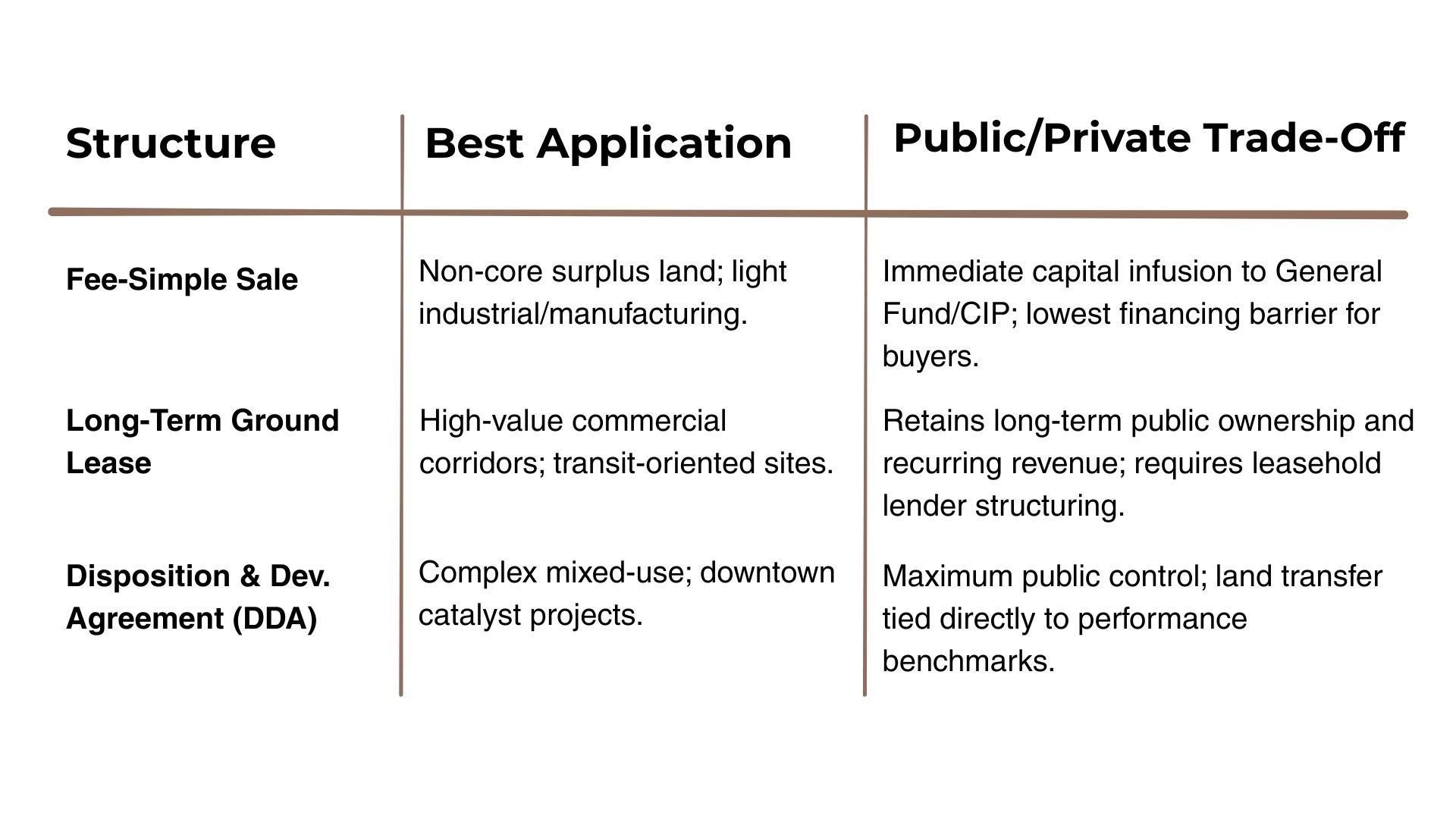
2. Choose the Conveyance Vehicle
How a city conveys publicly controlled sites dictates ongoing municipal control and revenue:
3. Run a Two-Step Solicitation (RFQ ➔ RFP)
Avoid releasing an open, unvetted Request for Proposals (RFP) on day one. A structured approach attracts stronger capital partners:
● Step 1: Request for Qualifications (RFQ): Use the RFQ to test capacity before asking for detailed site concepts. Screen for comparable project experience, balance sheet strength, access to capital, delivery track record, and familiarity with public-sector transaction requirements. Shortlist only the most credible teams.
● Step 2: Targeted RFP: Invite shortlisted teams to submit detailed architectural concepts, financial pro-formas, acquisition or lease offers, and implementation schedules. This keeps proposal effort focused and allows the city to compare serious offers on execution risk, fiscal value, and community fit.
● Proactive Broker Outreach: Actively brief regional commercial brokerage networks, NAIOP, ULI councils, and known sector-specific intermediaries rather than relying solely on a city procurement portal.
4. Sequence CEQA and the Surplus Land Act (SLA)
Transaction schedules routinely break down over procedural timing. The following items should be treated as legal and transaction guidance requiring review by qualified counsel and advisors before publication or implementation:
● Surplus Land Act: Confirm early whether the parcel may qualify for an exemption or whether notice and negotiation requirements apply before market release. Specific exemption categories, notice periods, and sequencing should be verified for the parcel and agency involved.
● CEQA and ENA Sequencing: An Exclusive Negotiating Agreement (ENA) can help establish a defined negotiation window while preserving later discretionary review. Final project approvals and property conveyance should be structured with counsel to ensure CEQA compliance and avoid premature commitment.
The Bottom Line
Readiness is theoretical until an agreement is signed. By packaging publicly controlled sites with utility certainty, selecting the appropriate transaction model, and managing statutory milestones, local leaders turn dormant public property into active economic drivers.